How to Select an FFKM O-Ring for Vacuum and Chemical Service
Learn when to consider an FFKM O-ring for vacuum or chemical service. Compare FFKM with FKM, check the groove dimensions, and define how the seal will be tested.
On this page (9 sections)
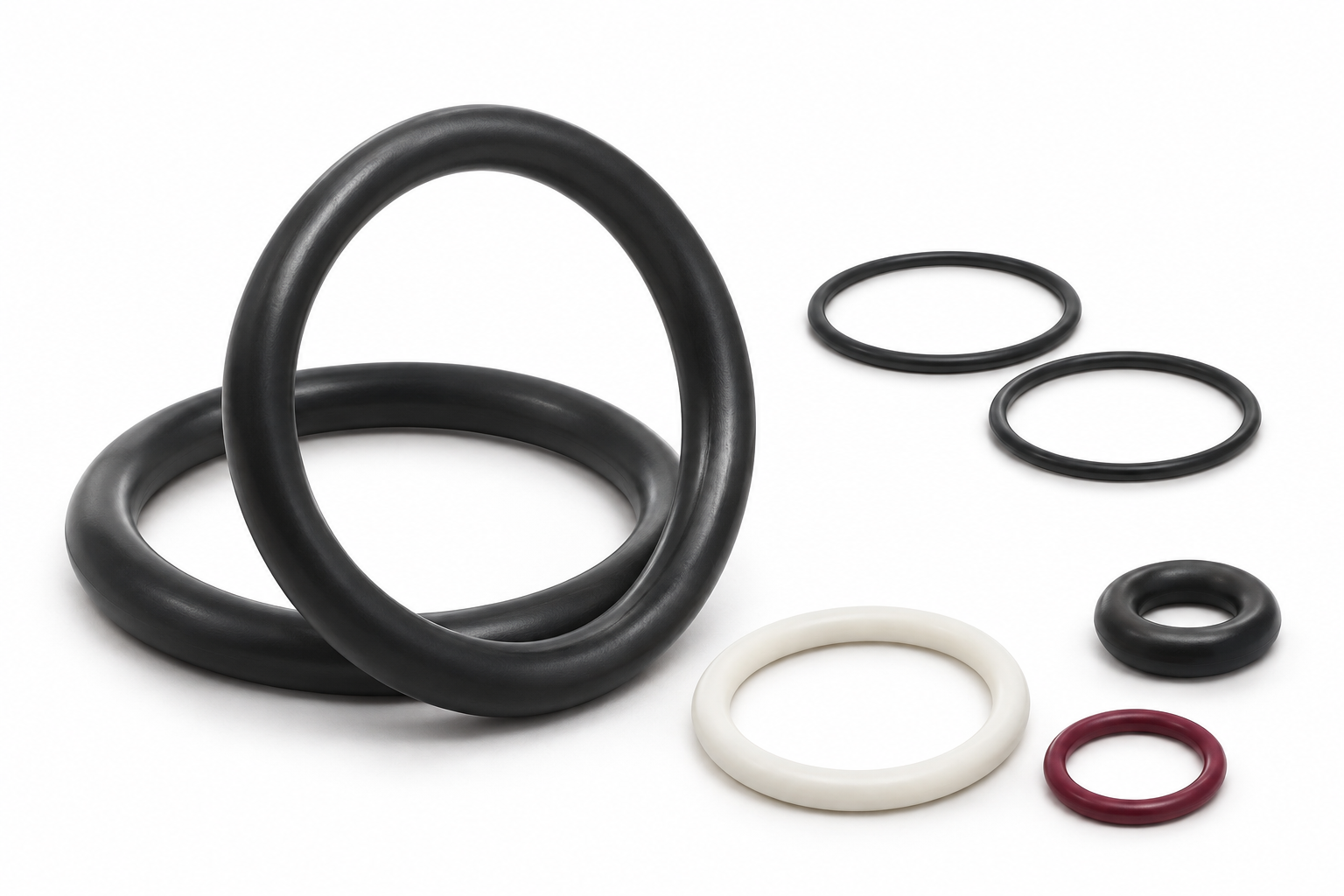
An FFKM O-ring is a perfluoroelastomer seal used where chemical exposure, temperature or a combination of the two makes sealing difficult. In a vacuum valve or chamber, the first selection question is what the ring experiences over a complete cycle. A seal may see process vapour during production, a different chemical during cleaning and its lowest temperature when the equipment restarts.
Use the process history to choose a candidate compound, the groove drawing to check fit, and a leak test to qualify the assembled seal.
1. When should you consider FFKM instead of FKM?
FKM is a fluoroelastomer family widely used for industrial O-rings. FFKM is a perfluoroelastomer family worth evaluating when a particular FKM grade has a documented compatibility or temperature limitation. Both designations cover multiple compounds. Ask for the grade designation on the quotation so the material reviewed by engineering is the material purchased.
| Operating condition | What to check | Selection decision |
|---|---|---|
| An existing FKM ring meets the leak target throughout its service interval | Confirm the installed grade and maintenance history | Keep that grade as the baseline for price and service life. |
| The ring swells after solvent cleaning | Record the solvent, concentration, temperature and exposure time | Compare compatibility data for the existing FKM and candidate FFKM grades under those conditions. |
| The joint leaks after a hot cycle and cooldown | Check compression set, groove depth and flange closure | Review the compound and the seal geometry together. |
| A vacuum chamber has a strict contamination limit | Obtain compound-specific outgassing or cleanliness data relevant to the process | Include contamination acceptance criteria alongside the leak-rate target. |
If a removed ring has a local cut or pinched edge, inspect the groove entrance and assembly procedure. Changing the polymer can leave the same damage mechanism in place. O-ring troubleshooting guide
2. Check chemical compatibility across the full temperature cycle
List every medium that reaches the seal, including cleaning agents, rinse water and steam. For each one, record concentration, temperature, exposure time and frequency. Use the temperature at the seal location where available. A chamber setpoint can differ from the temperature at a cooled or externally mounted flange.
One published grade illustrates why this matters. DuPont lists a suggested maximum service temperature of 316 °C for Kalrez® 4079 and advises against using that grade in hot water or steam. A steam-cleaned valve therefore needs a separate compatibility review even when its cleaning temperature is well below 316 °C. The figure applies to 4079 specifically. Kalrez® 4079 technical data sheet
3. Check O-ring squeeze and available groove volume
For an existing static face seal, start with the O-ring inside diameter, cross-section and tolerances. Obtain the groove width and depth from the drawing. Use the actual closed distance between the groove floor and the opposing sealing face when calculating compression.
Nominal face-seal squeeze (%) = (free O-ring cross-section − installed seal height) ÷ free O-ring cross-section × 100
For example, a ring with a 3.00 mm free cross-section compressed to an installed height of 2.40 mm has 20% nominal squeeze. This is a worked calculation. The acceptable range comes from the supplier’s guidance for the selected compound and joint.
Groove width does not appear in that calculation, but it matters. Two grooves can produce the same squeeze while leaving different amounts of space for the ring to expand. Check tolerance extremes, thermal expansion and expected chemical swelling before approving the drawing. For a moving stem or shaft, also review friction, wear and extrusion clearance. Existing-groove evaluation guide
4. Define what a passing vacuum seal must achieve
Specify the operating pressure, permissible leak rate, test method and test temperature before comparing samples. Record whether the pressure is absolute or gauge and whether the seal experiences a pressure reversal during venting or cleaning.
A chamber pressure reading alone cannot isolate an O-ring leak. Gas can enter through a joint, permeate through an elastomer or be released by surfaces inside the chamber. If pump-down time is the problem, record a baseline with the existing seal. If the requirement is a maximum helium leak rate, retain the same test setup and acceptance limit when comparing compounds.
Example — a valve that leaks after cleaning. Suppose a valve passes a room-temperature leak test when newly assembled but fails on the first cold restart after cleaning. Test a candidate ring after the same cleaning and cooldown sequence. Record the leak rate at restart and inspect the ring for swelling, flattening or local damage. That result answers the maintenance team’s question more directly than a second test on a fresh ring.
5. What to include in an FFKM O-ring enquiry
| Information | Details to provide |
|---|---|
| Seal and groove | Part number or size standard, inside diameter, cross-section, tolerances and groove drawing |
| Process exposure | Fluids and gases, concentrations, cleaning agents, exposure durations and cycle frequency |
| Operating envelope | Minimum and maximum seal temperatures, normal pressure, pressure differential and any reversals |
| Installation | Static flange, reciprocating stem or rotating shaft, plus assembly method and lubricant if used |
| Acceptance criteria | Leak-rate limit with units, test method, cleanliness requirements and intended service interval |
| Replacement history | Existing compound, time to failure, photographs and the process step at which leakage first appears |
For a vacuum equipment enquiry, send the groove drawing and operating cycle together. Include when the current seal first leaks so the application review can address that condition. Contact EUROTECH about your vacuum sealing application
Frequently asked questions
Can an FFKM O-ring replace an FKM O-ring of the same size?
Sometimes. Check the proposed FFKM compound against the process fluids, cleaning cycle and temperature range. Verify squeeze and available groove volume, then test the assembled seal against the required leak rate.
What is the maximum temperature for an FFKM O-ring?
Use the limit published for the exact compound. Check whether it applies to continuous operation or a short excursion, and whether the supplier supports the process medium at that temperature. Include the lowest restart temperature in the same review. Compound data sheets
How should I specify an FFKM O-ring for repeat orders?
Record the approved manufacturer and compound designation, size, tolerances and any agreed cleaning, packaging or traceability requirements. Link the specification to the drawing revision and qualification test so purchasing and maintenance can identify the approved replacement.