
Industrial Applications: Vacuum Technology
Industrial Applications of Vacuum Technology
Industrial vacuum technology supports lifting, positioning, clamping and automated transfer by creating a pressure difference between a workpiece and a vacuum circuit. In suction-cup handling, the cup contacts the surface and forms a seal. The right solution depends on the workpiece, available contact area, leakage and movement, together with the requirements of the complete machine.
For the underlying pressure terminology, see our introduction to vacuum. This page focuses on industrial handling applications and the factors that guide equipment selection.
Glass Processing and Panel Handling
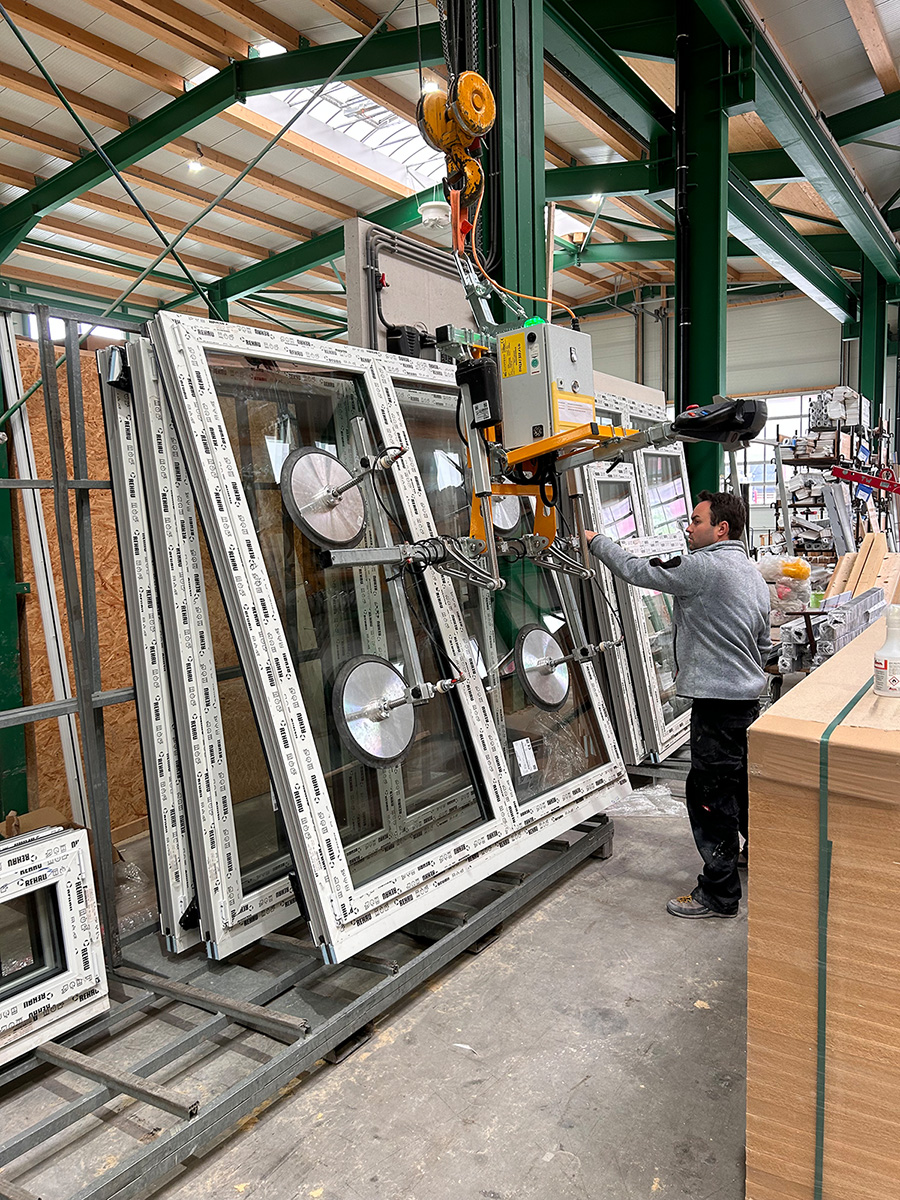
Vacuum cups can support the loading, transfer and positioning of glass panels in processing and assembly operations. Selection must consider panel dimensions, weight, coatings, curvature and the required orientation. The contact material and cleaning method also matter where surface marks or residue are concerns. Review our suction cups for glass handling for relevant product options.
Sheet Metal and Automotive Production
Vacuum handling is used to transfer metal sheets, formed panels and automotive components between process stations. Oil, surface texture and curved geometry can affect sealing and resistance to sliding. Cup layout, acceleration and handling direction must be assessed alongside the vacuum supply. Material compatibility should be checked against the actual lubricants, temperatures and surface conditions.
Woodworking and Furniture Manufacturing
Wood panels differ in porosity, surface finish and stiffness. Coated boards may seal differently from unfinished MDF, particle board or rough timber. A suitable system must account for air leakage as well as holding force. Vacuum clamping can also help secure workpieces during machining, provided the fixture, contact area and vacuum supply meet the process requirements.
Packaging and Logistics
Vacuum grippers can be used for cartons, trays, bags and other packages in picking and palletizing operations. Porous cardboard, flexible films and changing product dimensions create different sealing challenges. Evaluate the gripping surface, leakage, package strength and required cycle before choosing individual cups or an area gripper. Gripping trials help establish whether the proposed arrangement suits the actual products.
Robotic Picking and Automated Transfer
A vacuum end effector combines the gripping elements with a vacuum source, valves, connections and monitoring devices. Its design must suit the robot’s payload, movement and operating sequence. Reliable integration also requires a defined response to insufficient vacuum and a controlled release function. Our guide explains how a vacuum gripper works.
Select a System for the Actual Application
Start with the workpiece dimensions, mass, surface, temperature and handling direction. Then define cycle requirements, available utilities and any restrictions on marks or contamination. Compare vacuum ejectors, pumps and blowers against the required pressure and airflow, especially where leakage is expected.
EUROTECH can help review industrial suction cups and vacuum handling options for your application. Contact EUROTECH with drawings or photographs, workpiece details and information about your existing equipment. Confirm product specifications and the complete system’s operating limits before implementation.