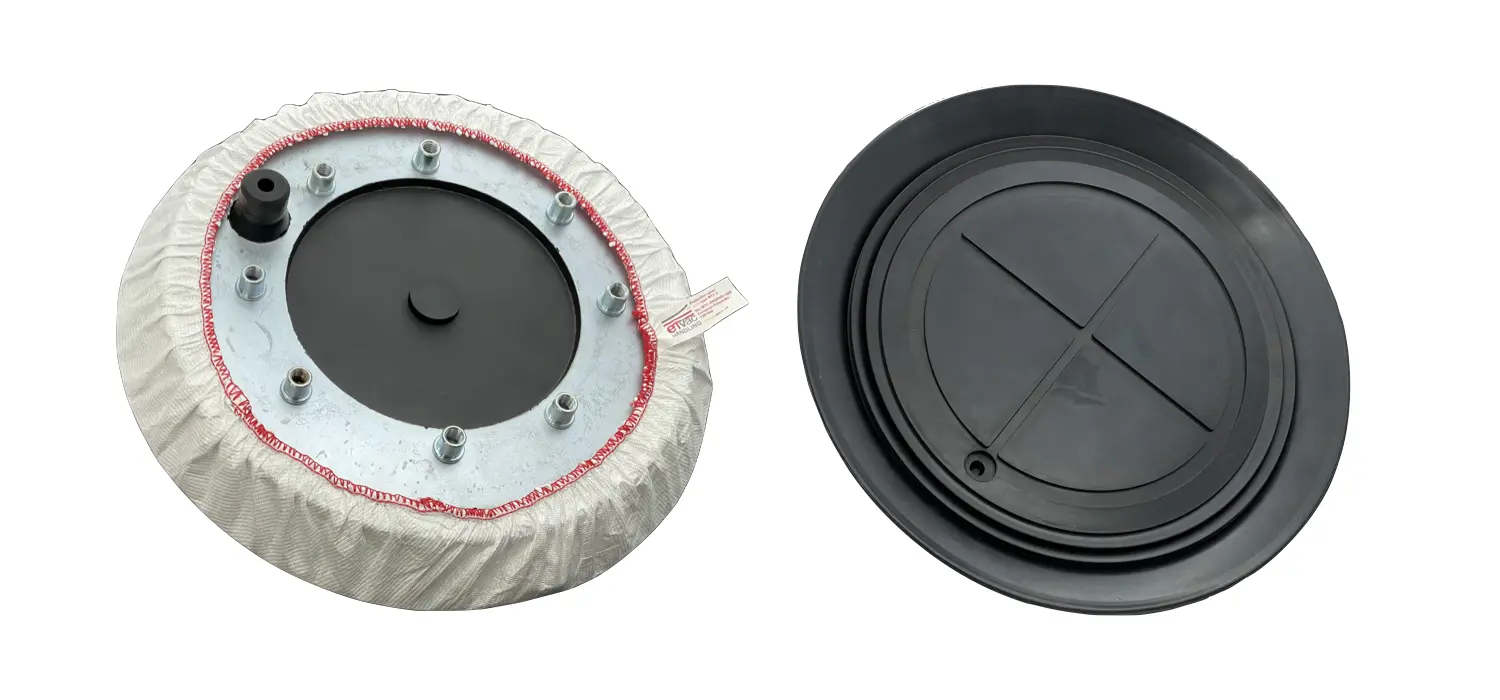
Preventing Contact Marks on Low-E & Coated Glass: Elastomer Choice vs. MTC Suction Cup Covers
Why ghosting marks appear after tempering or coating stages on float, Low-E, and insulating glass lines—and how to choose between low-mark elastomers and EUROTECH MTC protective covers.
EUROTECH Engineering Team2 min read
On this page (3 sections)
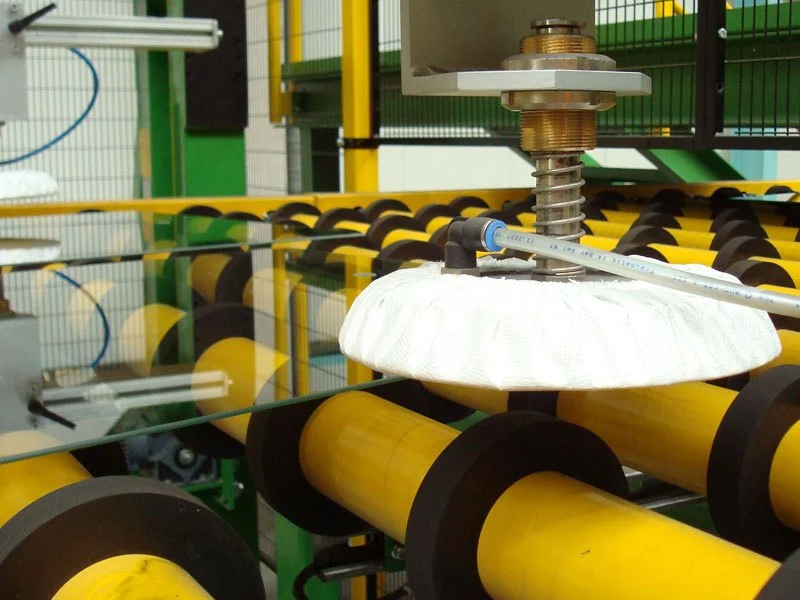
In modern architectural and automotive glazing lines, surface cleanliness directly determines yield. Even microscopic residue from conventional rubber suction cups can show up hours later as ghosting rings after magnetron Low-E coating, autoclave lamination, or thermal tempering.
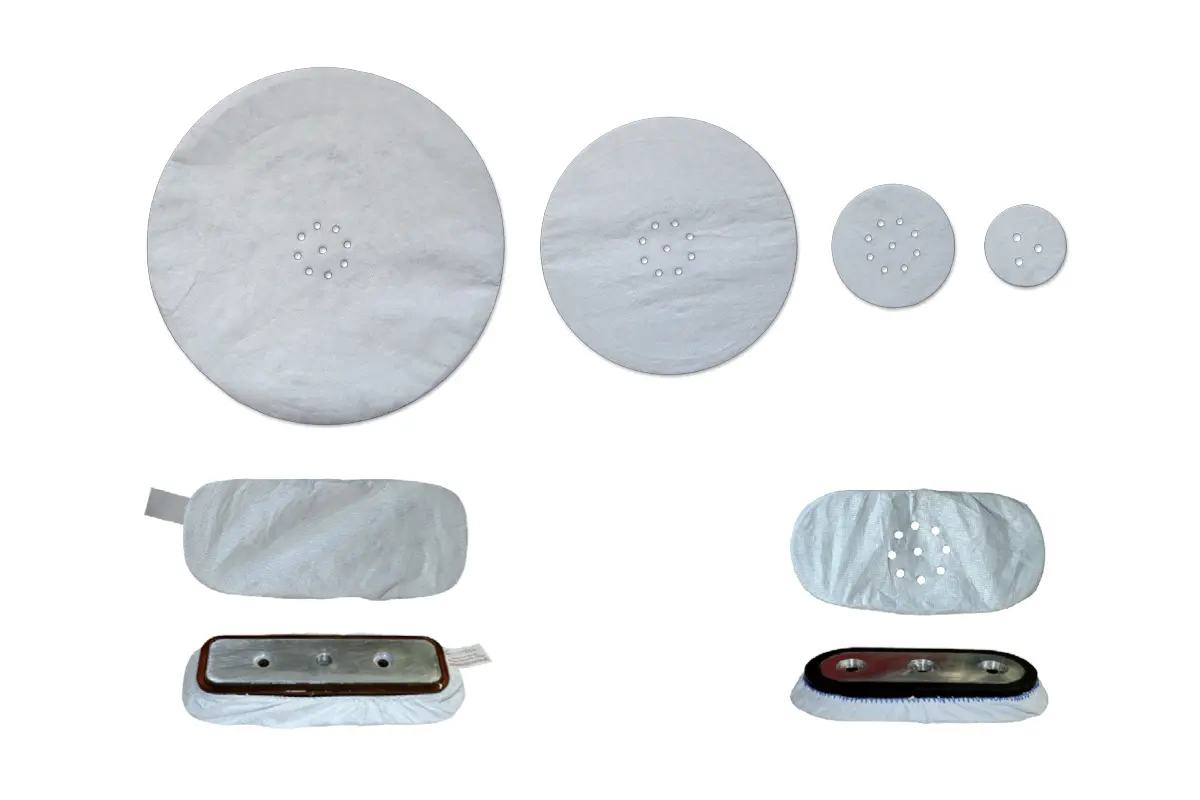
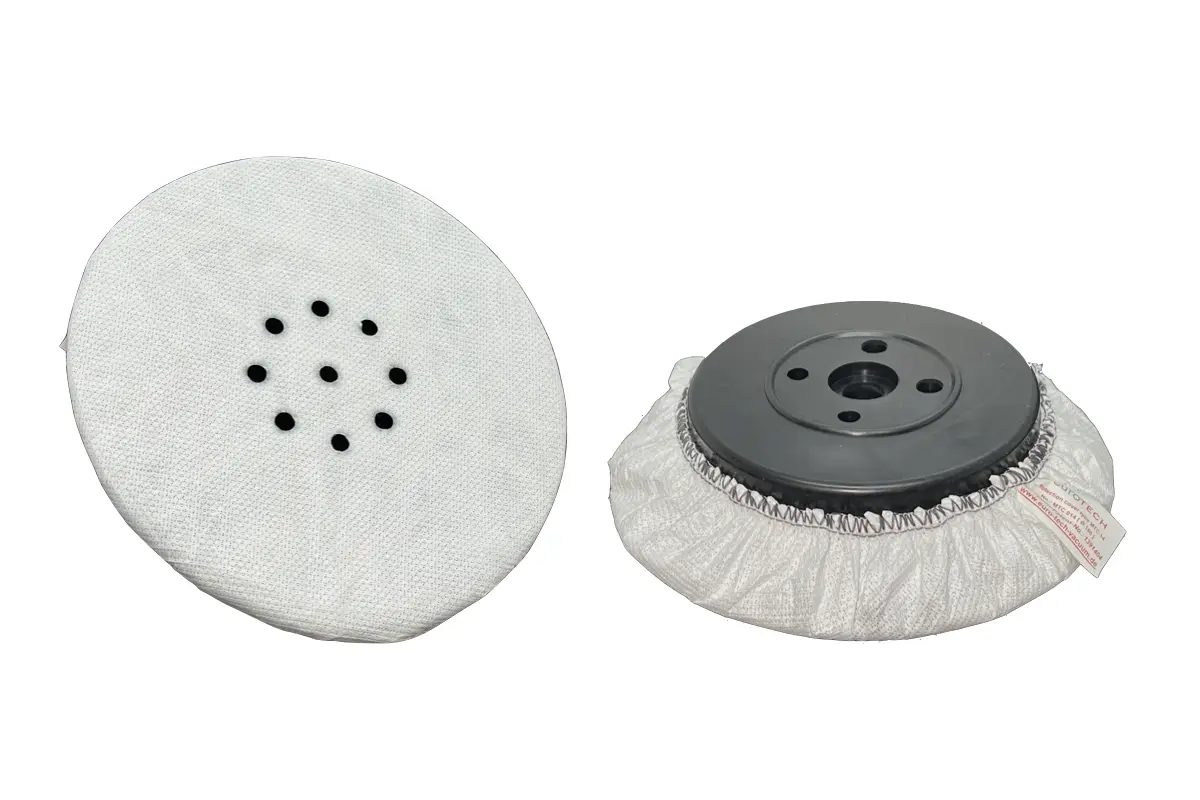 MTC suction cup covers form a clean, non-stick barrier between the elastomer lip and sensitive glass coatings.
Root Causes of Suction Marks in Glass Processing
Contact marks on glass rarely come from a single source. When diagnosing line rejects, check four distinct mechanisms:
- Plasticizer & Compound Migration: Standard black carbon-filled elastomers can transfer trace oils or plasticizers under high clamping pressure.
- Transfer of Line Contaminants: Cutting fluid, interleaving powder (PMMA/lucite), and airborne glass dust accumulate on sticky rubber lips and stamp onto subsequent lites.
- Micro-Slippage Under Shear: Undersized cups or worn sealing lips flex laterally during rapid acceleration, burnishing the soft metallic Low-E layer.
- Excessive Vacuum Over-Compression: Running higher vacuum than required crushes the cup body against the pane, multiplying contact stress.
Comparing Low-Mark Elastomers vs. MTC Suction Cup Covers
| Requirement | Low-Mark Elastomer Cups (Silicone / Specialty PU / HNBR) | EUROTECH MTC Suction Cup Covers |
|---|---|---|
| Freshly cut float glass with cutting oil | Moderate (oil still films on smooth rubber) | Excellent — absorbs/buffers surface moisture & oil film |
| Soft-coat Low-E & pre-coating lines | Good when cleaned on strict schedule | Excellent — prevents direct elastomer-to-coating contact |
| Zero airflow leakage / small ejectors | Best — airtight elastomeric seal | Requires adequate pump/ejector flow rate |
| Maintenance speed | Replace seal ring or entire cup | Quick elastic slip-on replacement; washable/replaceable |
Best Practices for Mark-Free Glass Line Operation
- Pair cup diameter to lower contact stress: Larger suction plates operating at moderate vacuum exert gentler localized lip pressure than small cups running at maximum vacuum.
- Inspect covers and lips on a scheduled shift checklist: Embedded glass cullet in any gripping surface will scratch subsequent lites—replace worn MTC covers proactively.
- Verify pump airflow headroom: When retrofitting MTC covers onto existing stackers, confirm that vacuum switches still reach setpoint within your target cycle window.
Frequently Asked Questions
Why do suction cup marks sometimes appear only after tempering or coating?
Trace plasticizers, release agents, or shop oils transferred onto raw float glass can remain invisible under ambient light, then bake into permanent optical distortion or coating adhesion defects inside high-temperature tempering furnaces or magnetron sputtering coaters.
Do MTC suction cup covers reduce available holding force?
Because breathable technical felt/fabric covers introduce controlled micro-permeability at the sealing perimeter, you should verify the vacuum generator's airflow capacity (suction rate) and account for the cover's friction and vacuum level in cup sizing.